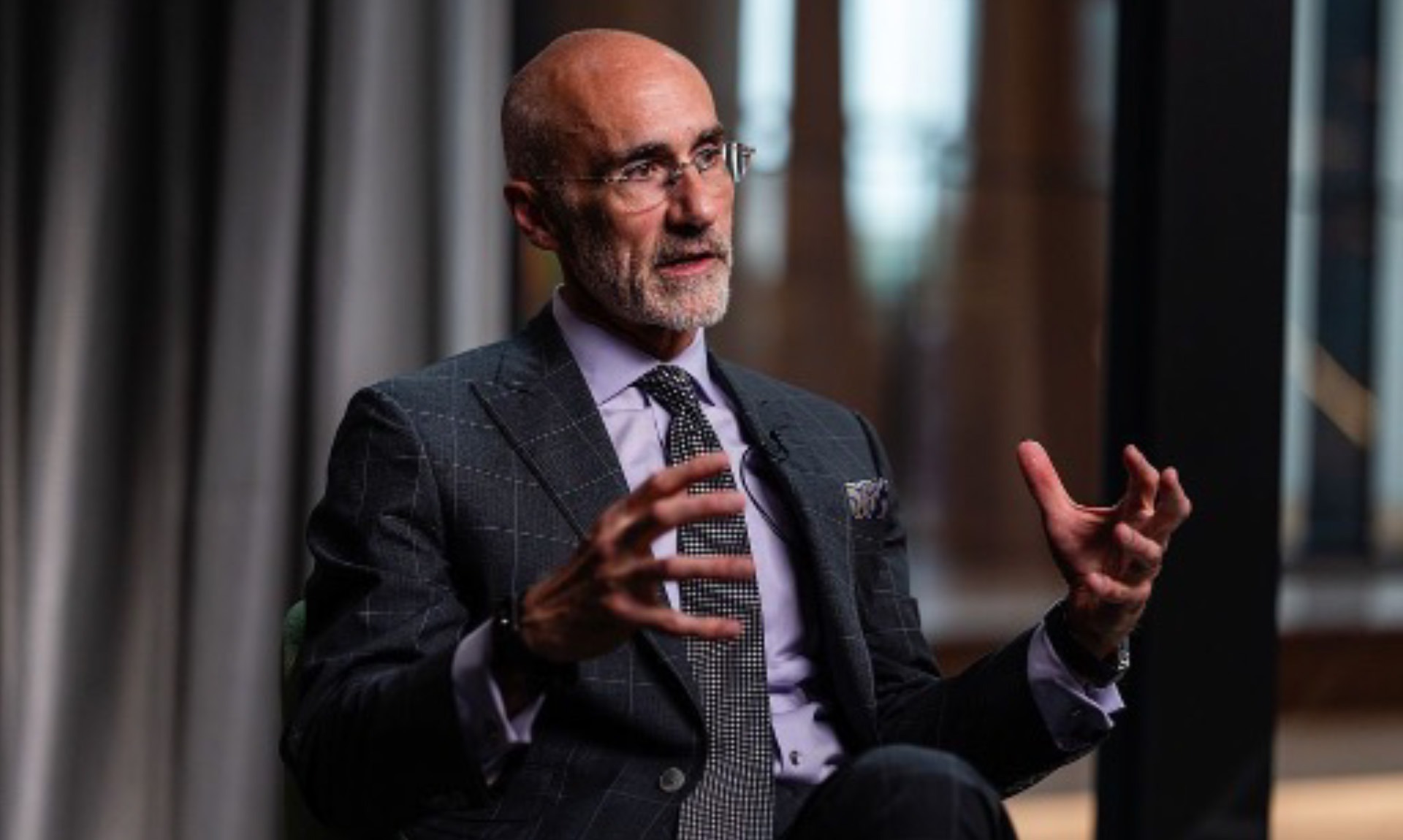
By Rev. Cameron Trimble, CEO of Convergence
Conversations about Artificial Intelligence (or Emergent Intelligence, as I sometimes call it) are all the rage. We are seeing tech CEOs calling for a pause, politicians fearing global competition, energy companies pushing for more data centers, and communities building movements of opposition. In other words, AI is having a moment.
It’s confusing for most of us because some people tell us AI will destroy the world. Others tell us it’s an evolutionary frontier. You can likely see both possibilities, just as I can.
I find it helpful to talk about emergence, because it helps me focus on what is changing as we interact with these systems: new abilities, new dependencies, new questions, and relationships we are still figuring out. This approach lets me be curious as I think about what this technology asks of us.
As spiritual leaders, we have our own way of looking at this time of decision. While our perspective is still developing in many faith circles, more of us see the need for strong theological and ethical structures. These can help us have better and deeper conversations about how AI could shape our movement now and in the future.
One question I keep coming back to in my own theological work is: Who are we becoming as we live with AI?
This question engages both our inner lives and our life together. It asks what happens to our judgment, attention, creativity, and ability to connect with others. It also asks who holds power through these systems, who benefits from them, and whose needs are shaping the future.

Our spiritual growth happens within these realities. Every time we look for an answer, follow a suggestion, or choose what to automate, we are determining how we live in the world.
Here are seven thoughts I have to help us look at these practices. I share them as commitments we can explore and grow in together.
1. AI should deepen wisdom, not replace discernment.
If you have ever struggled with a tough decision for months, you know the relief of finally finding a clear answer. A congregation facing big choices might find an AI-generated proposal especially appealing. The options are laid out, the language sounds sure, and suddenly a path seems clear. But before we follow that path, we should ask what makes it trustworthy.
Wisdom means knowing what matters in each situation. It takes paying attention to history, relationships, different responsibilities, and the effects our choices have on others. Sometimes, we only learn these things when we listen long enough for someone to share something hard.
A 2025 survey of 319 knowledge workers found that greater confidence in AI’s ability to perform a task was associated with less reported critical thinking. The study did not establish that AI inevitably weakens our minds. It does give us reason to notice when confidence in an answer makes further questioning feel unnecessary (see references below).
AI can help us look at arguments, compare options, and spot assumptions. We can even ask it to challenge our thinking. These are helpful tools for discernment, as long as we stay involved in the process.
To my mind, the spiritual question is whether using AI helps us grow in our ability to judge wisely and discern God’s call. Are we learning to ask better questions? Can we hear that “still, small voice?” Can we explain our choices? Are we open to hearing things that challenge what we want to believe?
2. AI should strengthen relationships, not replace them.
At St. Luke Lutheran Church in Lansing, Michigan, members speak more than a dozen languages. They acknowledge both the richness of that community and the practical difficulty of helping everyone participate. While organizing a district All Nations Celebration, Pastor A. Trevor Sutton and other leaders used Google Translate, an AI-powered app, to prepare presentations in Spanish, Arabic, French, and Swahili. Native speakers reviewed the translations and corrected errors before distributing the materials. The technology helped people follow the gathering across language differences.
This example shows a hopeful kind of spiritual imagination. The community saw a barrier to belonging and found a way to overcome it. Human knowledge was still essential. The goal was to help more people take part in their shared life.
Other experiences with AI bring up harder questions about relationships. Sometimes, a person might find it easier to talk honestly to a system that is always there, instead of risking misunderstanding with another person. This deserves compassion. It can show us both the helpful side of the technology and the struggles someone might be facing.
A four-week MIT–OpenAI study found associations between heavier chatbot use and greater loneliness and emotional dependence. The researchers cautioned that the findings did not establish that heavier use caused those outcomes. The relationship between a person’s needs, patterns of use, and wider life requires care in interpretation. But it raises interesting questions.
For faith communities, these become personal questions: Does this interaction help someone grow closer to others? Is there someone who knows what they are going through, notices when they are missing, and is willing to be there for them?
Our relationships need space for the messiness, give-and-take, and surprises that come with being with other people. As I so often say, “We are in this together.” AI should strengthen that essential theological truth.
3. AI should expand imagination, not narrow it.
I’m curious about what can happen when people get help exploring ideas they might not be able to express on their own.
A small congregation might investigate several futures for its property. A denominational team could examine different ways to share resources across regions. Someone who struggles to put thoughts into words might find language that helps them enter a conversation with greater confidence. When people have help, they have more freedom to take part and share their gifts.
But imagination also needs protection from becoming overly familiar. I recently read about an experiment by Anil Doshi and Oliver Hauser, who discovered that access to AI-generated ideas improved evaluations of individual short stories, particularly for writers with lower baseline creativity scores. The resulting stories were also more similar to one another. The study concerned a particular writing task, but the tension is worth considering wherever people seek fresh possibilities.
A congregation should bring its real-life experiences to the table. What are the children asking? Where do neighbors gather? What do people miss? Which gifts have we never made room for? These real details help us test new ideas. They also keep us open to possibilities that come from real-life encounters, not just what a system can predict.
4. AI should increase the common good.
When a congregation adopts a new technology, it makes a decision that may affect people who had little say in choosing it. A translation app could help one member follow worship while leaving another struggling because they struggle to use a smartphone. A service that lightens the staff’s workload could also collect personal information members never expected the church to share.
Before we decide something is an improvement, we need to hear from the people who will live with it. Who will find it helpful? Who will have a harder time participating? What are we asking people to give up in exchange for the convenience?
This concern has deep roots in Christian thought. In the thirteenth century, St. Thomas Aquinas made the common good central to his understanding of law and justice. Drawing on earlier thinkers, including Aristotle, he argued that law should serve the good of the community. His work gives us a demanding question to bring to technological change: are the rules we are creating worthy of the people who must live under them?
That tradition continues today. In Magnifica Humanitas, Pope Leo XIV applies Catholic social teaching to technological change, including the concentration of digital resources and the importance of meaningful community participation. For congregations, this opens a conversation about who gets to shape these systems and what obligations their creators and users have to the wider community.
The “common good” gives us a theological framework for examining these arrangements. In Magnifica Humanitas, Pope Leo XIV applies Catholic social teaching to technological change, including the concentration of digital resources and the importance of meaningful community participation. This work invites a larger conversation about the purposes technology serves and the power to determine those purposes.
Creation belongs within that conversation. The International Energy Agency projects that global data-center electricity consumption will roughly double between 2025 and 2030, with AI a major driver. That projection concerns data centers overall, rather than the footprint of an individual person’s use. It reminds us that digital systems depend on physical infrastructure with consequences for communities and ecosystems.
Building the common good depends on choices about access, work, privacy, resources, and leadership. Faith communities have a part to play in these choices. We can ask tough questions when we buy technology, bring together people with different experiences, and join public conversations about how AI is developed. Our moral responsibility goes beyond what happens on our screens.
5. AI should cultivate humility.
Sometimes, a smooth answer can hide uncertainty. A paragraph might sound thoughtful and convincing, but still include a claim that needs to be checked. Those of us who preach, teach, or write have a special responsibility because people trust us to use words carefully.
Humility lets us slow down. We can admit when we are unsure if something is true. We can check a citation, ask someone who knows more, or leave out a quote if we cannot confirm it. This practice is important for both our minds and our faith. It encourages us to let go of the need to always sound certain.
When a church uses AI, leaders can show simple honesty by saying, this tool helped us shape an idea, we checked these parts, and we are still unsure about this question. If we find a mistake, we can correct it clearly.
Our faith allows us to keep learning. We do not need to defend an answer just because we have said it before, or stick to a decision just because changing it might feel awkward. A good relationship with AI should make us more willing to ask, “How do we know?” It should also help us admit, even quietly, “We need help understanding this.”
6. AI should strengthen human vocation.
For someone worried about losing their job, the conversation about AI can feel very personal, very fast. Work often means years of learning, relationships, pride, and the ability to care for family. Someone might welcome help with a task, but still worry about what that help means for their role in the world.
Pastor and educator Gabby Cudjoe Wilkes places these concerns within pastoral care. She says, “We might not be able to tell our members how to use AI perfectly, but we can hold open our offices if they want to discuss their AI use and how it affects their lives. We can help them ethically discern how far is too far. We can listen to their excitement around how much easier their lives are with AI while still guiding them toward reflective questions that interrogate how safe the use of AI is based on their particular personal and professional needs.”
People need accompaniment as AI changes their personal and professional lives. Clergy can offer that presence while continuing to learn about the technology themselves.
Our congregations can create space for conversations that include both eagerness and worry. They can support learning, offer companionship during changes, and help people see gifts that go beyond any one job.
Our own hiring and work practices should show that same care. Before bringing AI into a staff role, ask the person doing the job what would help them. Which tasks wear them out? What would they like more time to work on? What might leaders miss if they are not close to the work? An administrator who notices someone is upset during a routine phone call has a kind of understanding that should be valued, especially as roles change.
The bigger question is whether technology helps people share their gifts and take part in the world more fully. Our belief in human dignity shows in how we treat people, especially when their economic value is in doubt.
7. AI should always remain accountable to human communities.
When a system suggests a decision, a vendor supplies the technology, and a leader follows its advice, it is not always clear who is responsible. Still, people affected by these decisions need someone who will listen and respond. Faith communities can make sure they include accountability in their own practices.
Be open about where you use AI in your work. Let people know who reviews the results. Keep information from pastoral relationships private. Make sure people know how to share concerns and speak to a real person. A prayer request might include someone’s most personal story. A pastoral conversation could reveal something they have never told anyone else. When we use technology, we should not quietly change the trust people have when they share these things.
Accountability also means being able to change direction. A congregation could try using AI in a small way, gather feedback after a month, and then decide whether to continue. The people who are supposed to benefit should help review the results.
Denominations can help by creating spaces for learning together and by sharing their knowledge with congregations that have fewer resources. They can also speak up together about issues that single churches cannot address on their own.
Discernment is a shared process when everyone has a real voice in decisions and someone remains responsible for what happens.
A conversation worth having
I hope our faith communities become places where people can talk openly about AI and think deeply together. There should be space for discovery, uncertainty, grief, and joy. We should have chances to look at both the help these systems give and the world they are shaping.
Convergence invites denominations and congregations to reach out for presentations and guided conversations about AI and faith communities. We are happy to help your community explore the theological questions, practical options, and shared commitments that are emerging now. Contact us to start the conversation.
Sources and Further Reading
- Lee, Hao-Ping, et al. “The Impact of Generative AI on Critical Thinking: Self-Reported Reductions in Cognitive Effort and Confidence Effects From a Survey of Knowledge Workers.” Proceedings of the CHI Conference on Human Factors in Computing Systems, 2025. Read the study.
- Sutton, A. Trevor. “Can AI Help Reverse Babel?” Faith & Leadership, April 15, 2025. Read the article.
- MIT Media Lab. “OpenAI Study Finds Links Between ChatGPT Use and Loneliness.” March 21, 2025. Read the overview.
- Doshi, Anil R., and Oliver P. Hauser. “Generative AI Enhances Individual Creativity but Reduces the Collective Diversity of Novel Content.” Science Advances 10, no. 28 (2024): eadn5290. Read the study.
- Pope Leo XIV. Magnifica Humanitas. Encyclical letter, May 15, 2026. Read the encyclical.
- International Energy Agency. Key Questions on Energy and AI. Paris: IEA, 2026. Read the report.
- Cudjoe Wilkes, Gabby. “Responding to AI Concerns Is a Matter of Pastoral Care.” Faith & Leadership, July 7, 2026. Read the article.






news via inbox
Don’t miss a moment—subscribe now and be the first to know when new stories drop.