by Gee NY — November 25, 2025
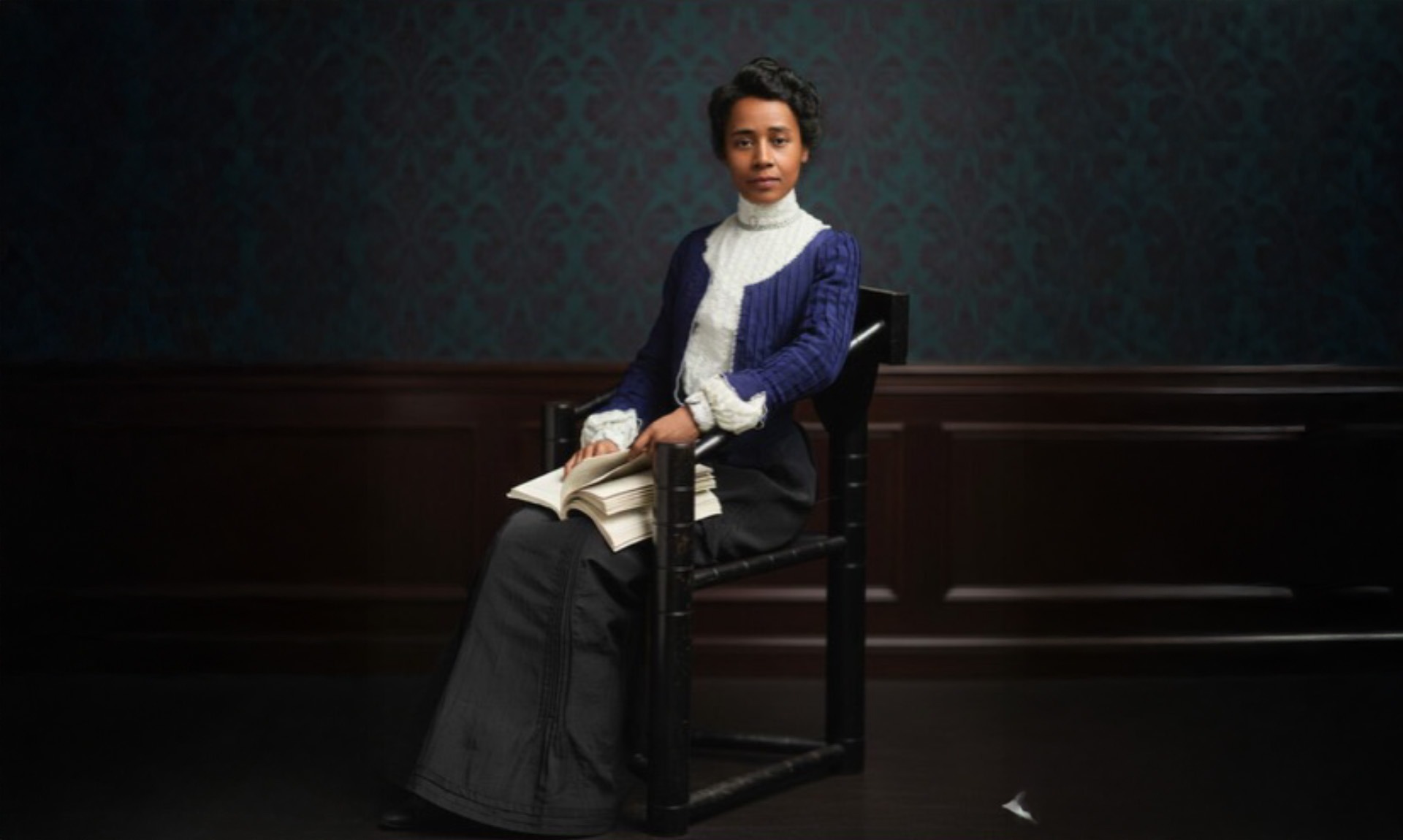
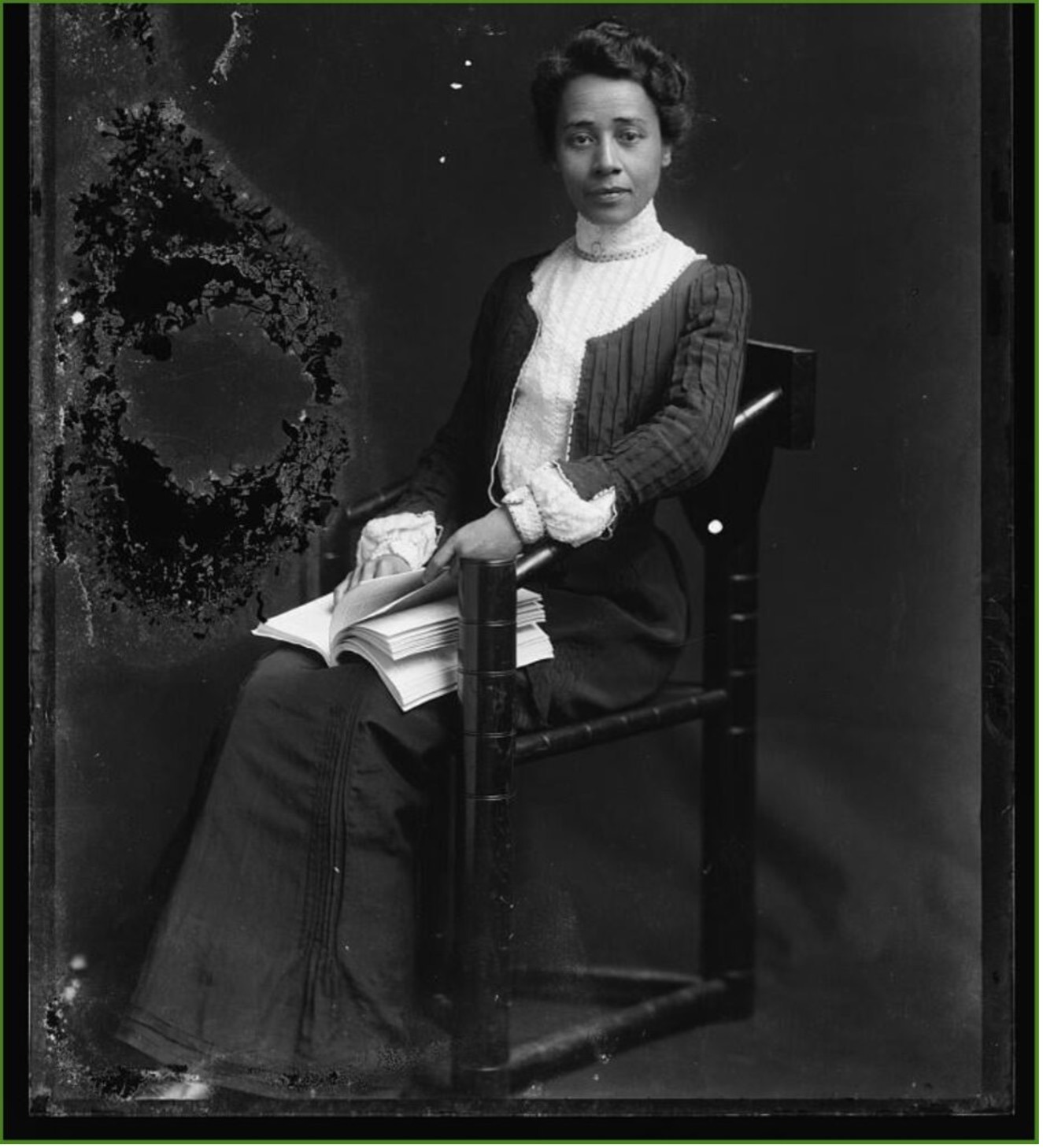
Colorized and modernized AI-generated image of Dr. Anna Julia Haywood Cooper. Image rendered by Gemini AI. Original Image by C.M. Bell Studio Collection (Library of Congress).
Most Americans flip past it without a second thought. Tucked on pages 24 and 25 of every U.S. passport is a line that reads:
“The cause of freedom is not the cause of a race or a sect, a party or a class – it is the cause of humankind, the very birthright of humanity.”
It is the only quote from an African American woman in the U.S. passport. And it belongs to Dr. Anna Julia Haywood Cooper, a woman born into slavery in 1858, who went on to become one of the country’s sharpest intellectuals, fiercest educators, and most important architects of Black feminist thought.
If you’ve ever traveled abroad, you’ve carried a piece of her legacy with you — perhaps without ever knowing her name.
A Life That Defied the Limits of Her Time
Cooper’s story reads like an act of defiance from beginning to end.
Born in Raleigh, North Carolina, to an enslaved woman and the enslaver who likely fathered her, she came of age in the fragile years after Emancipation. At St. Augustine Normal School, she was so academically advanced she began tutoring other students by age 10. But what truly signaled the trajectory of her life was her unwillingness to accept the limits set for girls.
The Greek and Latin courses were for boys. She demanded entry. She won.
That pattern repeated itself at Oberlin College, where she again had to petition her way into the “gentlemen’s courses.” She earned both her bachelor’s and master’s degrees in mathematics — at a time when most Black women were shut out of higher education entirely.

The Teacher Who Refused to Lower the Bar
Cooper carried that same refusal into the classroom.
After moving to Washington, D.C., she became a force at M Street High School — the city’s most prestigious Black public school. While many officials pushed a narrow “colored curriculum” focused on vocational training, Cooper insisted her students deserved access to the full spectrum of academic rigor.
She sent young Black scholars to places like Yale and Harvard. She fought the D.C. school board when it tried to curb her ambitions for them. And when the board ousted her as principal in 1906, she simply kept teaching — and kept pushing.
A Voice from the South — and Ahead of Its Time
Her most enduring imprint came in 1892 with the publication of A Voice from the South, a groundbreaking collection of essays and speeches that remains one of the foundational texts of Black feminist thought.
Cooper argued that the progress of the entire race depended on the education and elevation of Black women. She called out Black men for ignoring the violence Black women endured. She criticized White women for abandoning universal suffrage when Black women demanded equality too.
“Give the girls a chance!” she wrote — a plea that rings as a command across history.
Placing Black women at the center of debates about race, gender, education, and power, she stood shoulder-to-shoulder with contemporaries like W.E.B. Du Bois, Ida B. Wells, and Frederick Douglass — and often challenged them too.
A Global Scholar — Even in Her 60s
At 66, when most people begin slowing down, Cooper completed her doctorate at the University of Paris, Sorbonne, becoming only the fourth Black woman in the U.S. to earn a PhD. She maintained an international presence, writing, teaching, and advocating for civil rights long before the modern movement would take shape.
She lived to be 105 — working, writing, and mentoring across three centuries of American life.
Anna J. Cooper: A Voice from the South exhibition records. Anacostia Community Museum Archives, Smithsonian Institution.
The Only Black Woman Quoted in the U.S. Passport
Her inclusion in the U.S. passport is not merely symbolic. It is a reminder — quiet but profound — that the ideals Americans carry across borders were shaped not only by founding fathers or presidents, but by a Black woman who was once denied the rights that document represents.
Her words, written in 1892, speak to a struggle far older than the passport itself:
“The cause of freedom is… the very birthright of humanity.”
It is difficult to imagine a more appropriate message for a document meant to move people across borders.
Why Her Legacy Matters Now
Cooper’s life is a roadmap for how intellectual force, moral clarity, and sheer stubbornness can reshape a nation. She fought for girls who were never meant to sit in advanced classrooms. She challenged men who believed they alone carried the race’s future. She demanded that America live up to the ideals printed in its founding documents.
In many ways, her quote still challenges the country carrying it today — to redefine freedom not as a privilege, but as a shared obligation.
More than a century after she wrote that sentence, Dr. Anna Julia Cooper remains what she always was:
A truth-teller.
A trailblazer.
And the rare kind of voice that outlives the era that tried to contain her.







news via inbox
Don’t miss a moment—subscribe now and be the first to know when new stories drop.