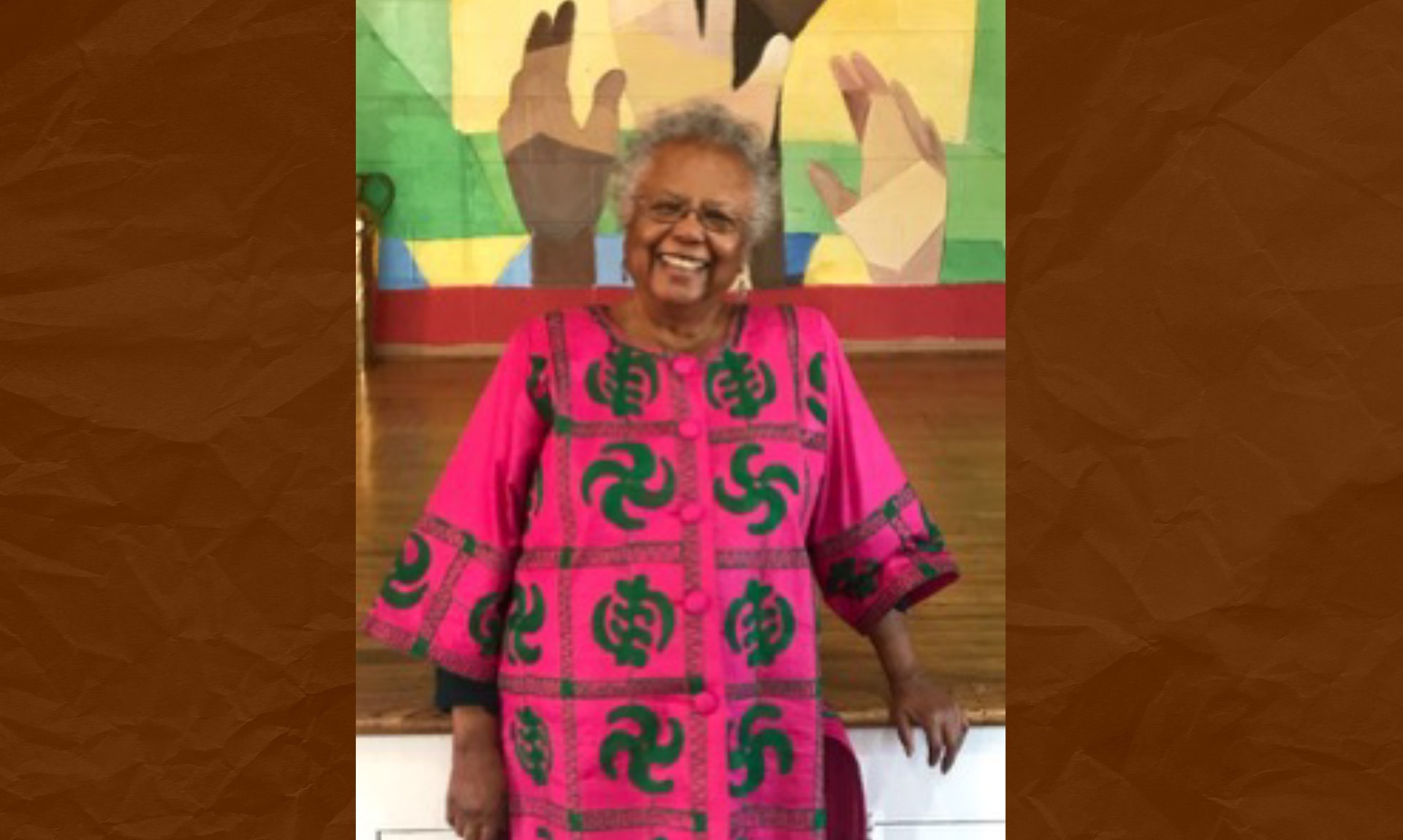
Rev. Dr. Rita L. Dixon reflects on white supremacy, Black history, faith, and the evolving struggle for justice in American life.
This response was based on a personal reflection of my life on two themes raised in Dr. Bonner’s excellent presentation, Making It Plain. This summary is not in the order that I spoke, as heard on the tape. I actually began with the book, The 1619 Project, and came back to my early socialization. However, my outline was in chronological order, so it was easier for me to write the notes in that order. I have added some sentences to what I actually said for clarity for the reader. This reading may not be exactly what I said, but I hope I retained the meaning. It is not a transcript.
Early Socialization
My perspective on White Supremacy was shaped by experiences from growing up in Johnson County, Georgia, in a rural close-knit community of Black farm families, most of whom were related or had long years of family-like ties. The center of our community was Hubbard Chapel Baptist Church, which served as a place for worship and Sunday School on Sundays and as our school house during the week.
White Supremacy was the normal way of life. A few examples:
White children called Black adults by their first names. We didn’t.
White children rode school buses to school. We walked.
Books were used by White children before they were passed on to Black schools.
Our parents were completely outside of the political system. They were not allowed to vote in local, state or national elections. Yet their labor in the cotton, corn and peanut fields provided the system’s wealth. They were not protected or fed no matter how much they conformed to the system.
In Dr. Bonner’s George Orwell’s Animal Farm analogy, it seems to me that our parents’ labor supported the Animal Farm. They were not citizens in it. They held it up.
A simplified statement of the message I internalized from this socialization was: “Do the right thing, work hard, be good, serve God who was all-powerful and on our side. God would fix it by and by.”
Higher Education
I finished high school. I went to a Black college where I learned some Black History, enough to put my early socialization into a Black History perspective. After college I taught in a high school for a couple of years and then moved into a mix of teaching and study in many universities. I thought at one point in this journey that I was making a career of going to school.
The message I was internalizing and passing on was the importance of education with faith in God. We would overcome someday.
The Civil Rights Movement
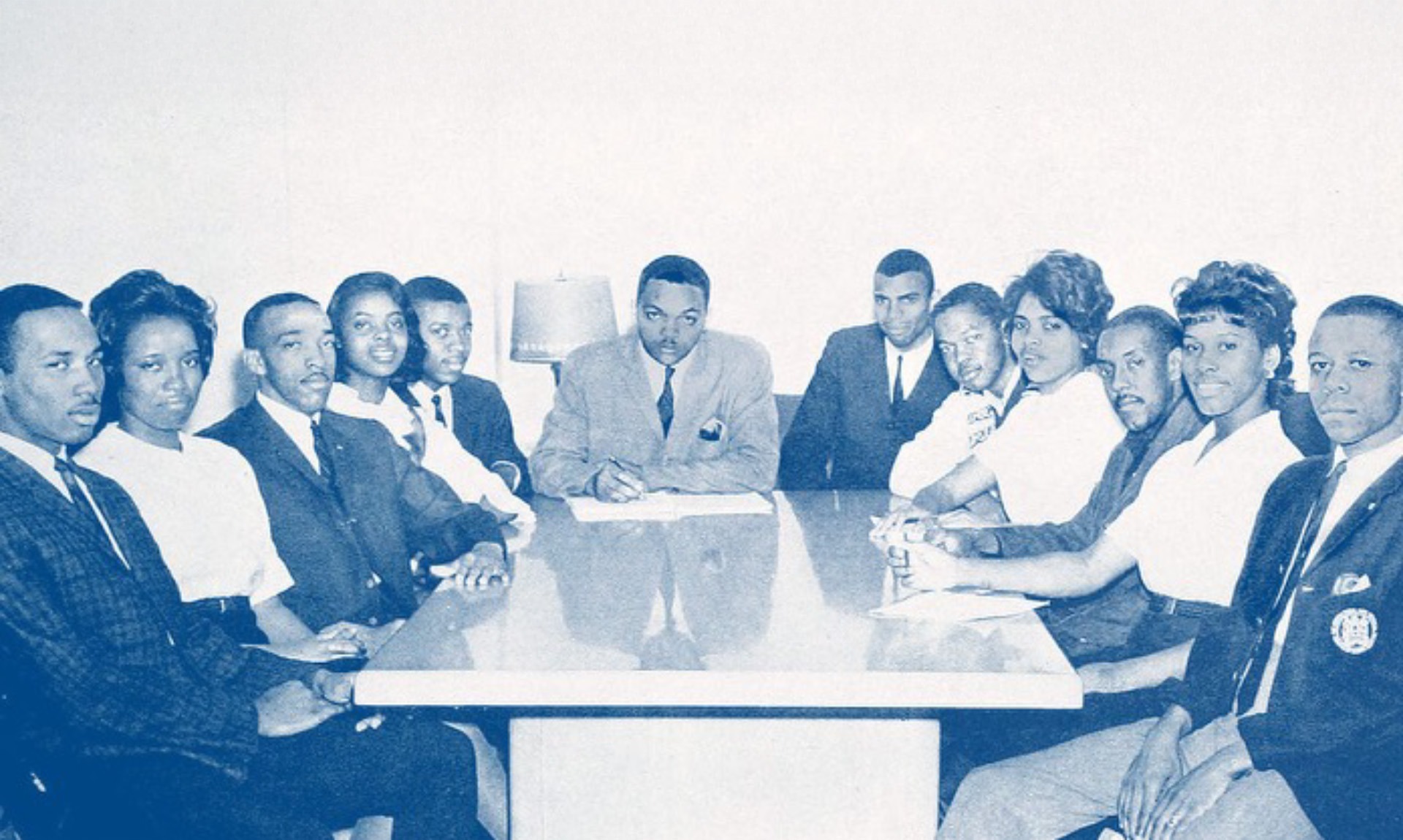
The sit-in began in Greensboro, North Carolina, on February 1, 1960, my first year in graduate school. During this time I became active in resistance to segregation with a group of graduate students. Dr. Martin Luther King Jr. paid for our first picket signs. He introduced my graduate school group to Ella Baker, who became my mentor in the Civil Rights Movement of the 1960s, resistance through direct action. I believe American democracy made a lot of progress because of the Civil Rights Movement. The country even elected a Black family to the White House.
The message I internalized is that I had a long line of ancestors who had fought for justice and I must fight too. We would win someday because God was on our side.
The MAGA Movement
In many African American minds, mine included, democracy for all Americans was progressing. Many of us were not aware that the progress could be dismantled. After President Obama left the White House, the Make America Great Again, or MAGA, movement rose to political power. Their goal is to eradicate everything that has been accomplished toward a multicultural inclusive democracy. Their intent is to take America back to the era of America’s history when White Supremacy was the norm. They seem to be doing just that.
I agree with Dr. Bonner that White Supremacist Racist Thought, WSRT, is a problem. I might even go further and say, “For Black People it is the problem for the 21st century.”
The supporters of MAGA politicians have motivated me to reflect deeply on the major movements of my life journey. I am currently in deep pain and my beliefs are in flux. I can see the changes of some of my beliefs from the past, and some are still changing.
The 1619 Project and Black History
In January of this year, the Outreach Ministry group at my church began a group reading of Nichole Hannah-Jones’s book, The 1619 Project. The goal is to learn more about African Americans’ contributions to this country by the bicentennial celebration of America later this year. We believe that our story will be, at best, minimized, if not missing, from the story of America.
This reading group has been a lifesaver for me. We meet on Zoom for one and a half hours. We read one chapter each week before the meeting and make notes of our questions and comments in order to have more time for discussion. The leader of the week guides the discussion.
The book takes a deep dive into suffering, heroic actions, and sacrifices of Black people and how that history was used to develop America’s institutions. For the first time, I am understanding the deeper meaning of Critical Race Theory, a theory developed by a group of lawyers. The theory basically says that racism is at the foundation of every American institution. Nicole’s well-documented book gives us a perspective on how we are at the conception of America.
I agree with Dr. Bonner that knowledge of Black History can be an antidote to White Supremacist Racist Thought, at least in our own minds, which is important. However, I now believe we have to go beyond knowing Black achievers for the purposes of Black pride. Nicole is showing me that we cannot fully understand Black achievement unless we know the Black history behind it and how it fits into the larger picture of American history.
I think it is impossible to live in American society without internalizing to some degree WSRT. It is prevalent in textbooks and films, schools and churches, colleges and universities, in every facet of life. In my experience, even Black schools perpetuate WSRT.
While I have had a few courses in Black History in the colleges and universities I attended, most of my education promoted WSRT. Most tell the story of America’s development and never mention Black people. We are invisible.
Knowledge is not benign. Whose knowledge? I believe we need to focus more on our own experiences, past and present. I do not mean this in an isolationist way. Yes, we need to engage with other races. I think we have much to share with and learn from others whose experiences have been different. No one race is the whole picture. However, I do not think we need to make racial reconciliation our goal. Too many of us do not know who we are.
Resistance Strategies
According to the nineteen chapters of The 1619 Project, the lies, cruelty, and violence of the past never stopped. It only operates under more sanitized names. I think WSRT will be with us a long time, and we need ever-changing resistance strategies. I think of three from what I have already said.
Black History gives us many examples of freedom fighters such as Ella Baker, Martin Luther King Jr., Nat Turner, Sojourner Truth, the Hidden Figures, Stacey Abrams, Jesse Jackson, and Amanda Gorman. My hope is that more of us will go beyond quoting them to following them.
Strengthening our communities by sharing information, discussing our experiences, and helping where possible is very critical. I remember the adults in my community of origin spending long hours after church talking to each other about their problems and successes.
Becoming more involved in local, state, and federal government so we are informed, know our rights, and can advocate for everyone’s wellbeing is also essential.



news via inbox
Don’t miss a moment—subscribe now and be the first to know when new stories drop.