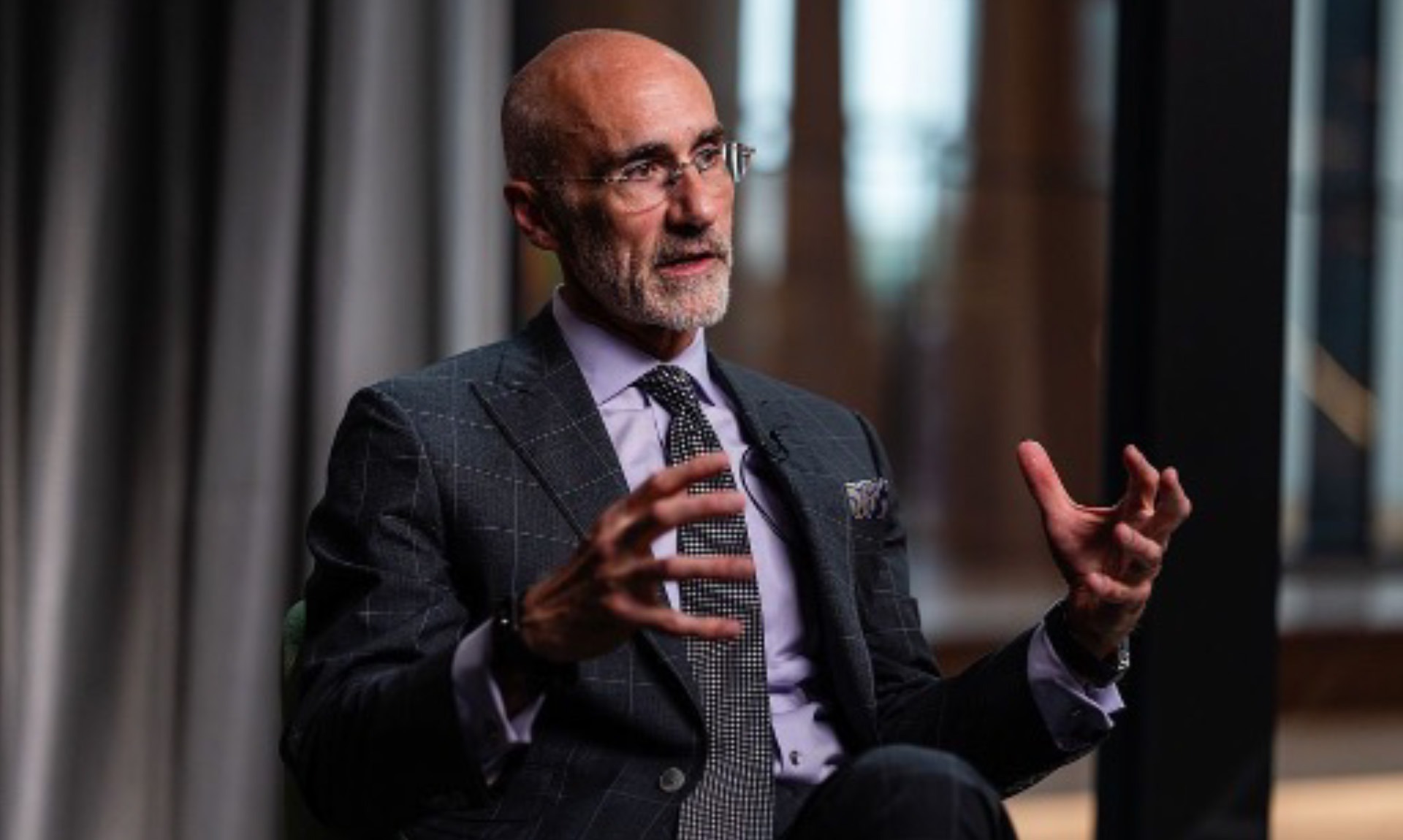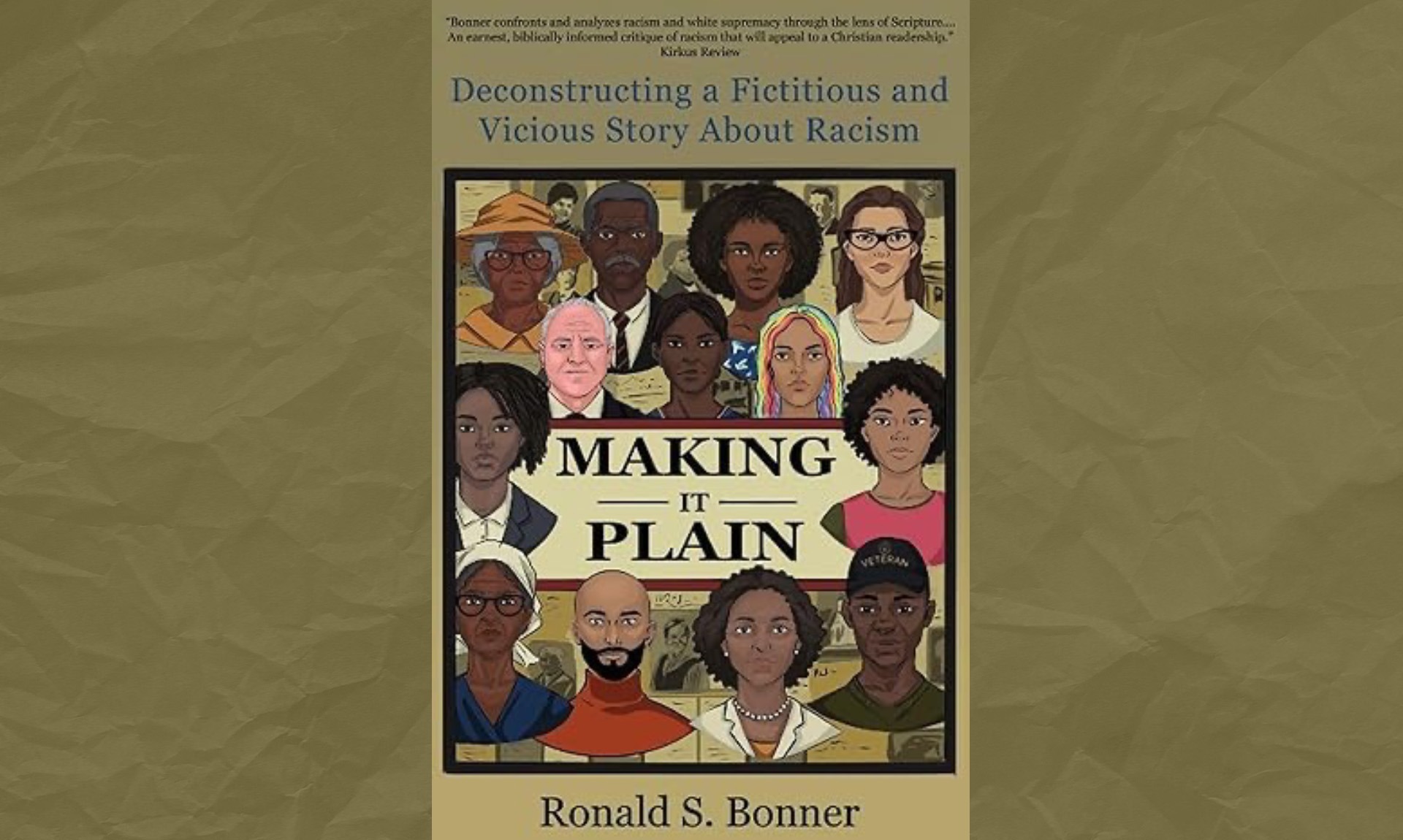
Rev. Dr. Ronald S. Bonner discusses racism, white supremacy, justice fatigue, reparations, and the long work of building social harmony.

UMI: Thank you again for serving as the speaker at the UMI Black History Celebration. For those who were unable to join us, please tell our readers what your latest book is about.
Rev. Dr. Ronald S. Bonner: This book offers a practical journey toward racial reconciliation and harmony. The path winds through a garden of hope and resilience that grows over the rocky cliffs of racism, the dangerous turns of white supremacy, and alienating gorges of bigotry. This book emphasizes the hope of a restorative harmony while reminding us of the history that led us to this place of sinful disillusionment.
UMI: So, it’s about racism?
Bonner: But I thought this was a book about antiracism, someone may ask. And yes, it is, but since racism’s end will not come overnight, resilience is required to overcome the potential fatigue that the supporters of white supremacy and racism are counting on. We need to understand how resilience helps us to stand and withstand the evils of what I will refer to as racism. As a starter, white supremacy is a mental illness, racism is a cancer, and bigotry or hateful prejudice is a heart condition. And I posit that only with the proper conditioning of applied resilience can we put an end to these diseases. But for this presentation, I may refer to them all as racism, which is the economic engine of white supremacy; bigotry is the fuel, but racism is the engine that keeps it going.
UMI: What made you decide to write this book?
Bonner: Making It Plain is the result of my D.Min. dissertation and a previous writing titled No Bigotry Allowed. I started writing my dissertation on addressing homelessness, or houselessness, but with the murders of Breonna Taylor, Ahmaud Arbery, and George Floyd, among others, I needed to change my focus. Because what I wrote in 2015 was happening again in 2020 and, well, persists.
The beginning of antiracist resilience and unlearning racism is understanding the biblical axiom that one should not bear false witness against one’s neighbor or lie about others. Racism is built on a sandy foundation of lies, or as Yuval Noah Harari calls them, fictions.
Most of us are familiar with W.E.B. DuBois’ prediction that “the problem of the 20th century is the color line.” We know that the problem of the color line has outlived the 20th century and persists in the 21st century, where it still doles out financial and other advantages to some and withholds them from others.
Many practitioners of white supremacy have an internalized notion that the so-called white race is superior to so-called other races. Bonner points to scholarship that helps expose race as a political and social construction rather than a biological truth, and he argues that racial categories were built to ease the guilt associated with cruelty, domination, and disassociation from loving one’s neighbor as one made in the image of God.
He also draws on theological and historical frameworks to argue that systems of racial hierarchy were reinforced through colonial Christianity, the Doctrines of Discovery, and later American ideas such as Manifest Destiny. In his telling, these narratives became part of a broader global curriculum that taught people who belonged, who ruled, and who was expected to submit.
What Bonner Means by White Supremacy
UMI: Clarify for our readers: what do you mean by “white supremacy”?
Bonner: This is what white supremacy and racism working together have established in the world in which we live. White supremacy is the global curriculum, yet it is a fiction, used to organize global acceptance. Its authority, allegedly, derived from God, as established in the papal bulls known as the Doctrines of Discovery, which, after the Revolutionary War of 1776, entered the American lexicon and became known as America’s Manifest Destiny.
Bonner argues that white supremacy functions as both a political and psychological framework. It shapes a culture in which whiteness is repeatedly centered as heroic, inventive, and normative through images, schooling, policy, and repetition. He connects this pattern to a deeper pedagogy of domination that conditions people to accept racial hierarchy as common sense.
He also highlights how these systems reward compliance. A ruling class benefits, a subordinate class helps enforce the system, and a cultural curriculum teaches each generation how to preserve it. The result is not simply prejudice, but a durable order that assigns meaning, status, and power.
Why Racism Persists
UMI: You make a very astute observation about why racism exists. Share that, please, with the readers.
Bonner: Bonner points to the argument that racism persists because there is a market for racism. A sense of superiority helps keep that market alive. It keeps many people materially comfortable while making a few extremely wealthy, as long as they conform to the system.
He also suggests that reason alone often fails to break racist thinking because such narratives become bound up with fear, identity, and reflexive emotional responses. In that sense, racism is not merely a bad idea to be corrected with a better fact. It can be a socially reinforced worldview that many people experience as necessary to their own sense of value and place.
Justice Fatigue and the Need for Resilience
UMI: What do you mean by the phrase “justice fatigue”?
Bonner: Bonner describes justice fatigue as the exhaustion that comes when activists, teachers, and learners keep trying to break through hardened racist reflexes and begin to lose the resilience needed for sustained engagement. In those moments, he argues, people can move from careful analysis to reactive dismissal, which weakens the work.
For Bonner, resilience matters because supporters of racism and white supremacy are counting on fatigue. The struggle requires not only moral conviction, but energy, endurance, and the ability to stay focused over time.
Can Racism Be Unlearned?
UMI: In response to racism, is it possible to unlearn racism, and if so, how?
Bonner: Yes, but it requires disciplined formation. He outlines several pillars that support the long work of unlearning racism and resisting fatigue.
Pillar 1: Knowledge. Knowing truth from lies prevents people from wasting energy defending false premises. Bonner stresses the importance of Black history, truthful historical memory, and learning examples of Black excellence and achievement that dominant systems often ignore or distort.
Pillar 2: Focus. Bonner argues that people must know what truly matters and refuse to be redirected by trends, slogans, excuses, and clickbait. For him, focus keeps communities from endlessly waiting for ideal circumstances rather than acting from shared values and interests in the present.
Pillar 3: The willingness to pivot. Bonner insists that staying committed to justice does not mean clinging to outdated tactics. Reflection must accompany action. If an older strategy no longer works, it may be necessary to free up energy for a better one.
Throughout the interview, Bonner returns to one central idea: racist narratives must be exposed as lies. He frames white supremacist racist thought as a mythology sustained by power, repetition, and cruelty. The task, then, is not only to condemn the myth but to deconstruct it until it loses its authority.
Reparations, AI, and the Future
UMI: What do you think of reparations?
Bonner: Bonner supports reparations for the descendants of formerly enslaved Africans and suggests that reparations should address both economic injustice and cultural restitution. He also raises concern about the future, warning that artificial intelligence could become a tool for the erasure of Black history if shaped by political actors resistant to Black progress.
Is Social Harmony Possible?
UMI: Do you think it’s possible for us in the USA to create social harmony?
Bonner: Bonner believes social harmony is possible, but not through denial, blame-shifting, or shallow fixes. He argues that exposing racist narratives is essential, yet he also emphasizes the need for what he calls relationship-building across difference. Drawing on the idea of “heretical friendships,” he suggests that conversations, meals, and truth-sharing can help break down walls between people without surrendering the seriousness of the work.
He acknowledges that not everyone will change, and that some remain fully committed to racism. Still, he believes their influence can be neutralized over time if people remain committed to truth, resilience, and the patient work of transformation.
Closing Reflection
UMI: This is a very interesting perspective you are presenting. Thank you for this interview. As we prepare to close, are there any last words you’d like to share with us?
Bonner: Bonner closes by arguing that technical quick fixes cannot solve adaptive, systemic problems. The struggle against racism requires deeper transformation, including a change in language, thought, and shared social assumptions. For him, the test of a nonracist society will be a world in which skin color no longer functions as a dividing line of meaning, power, and worth.







news via inbox
Don’t miss a moment—subscribe now and be the first to know when new stories drop.