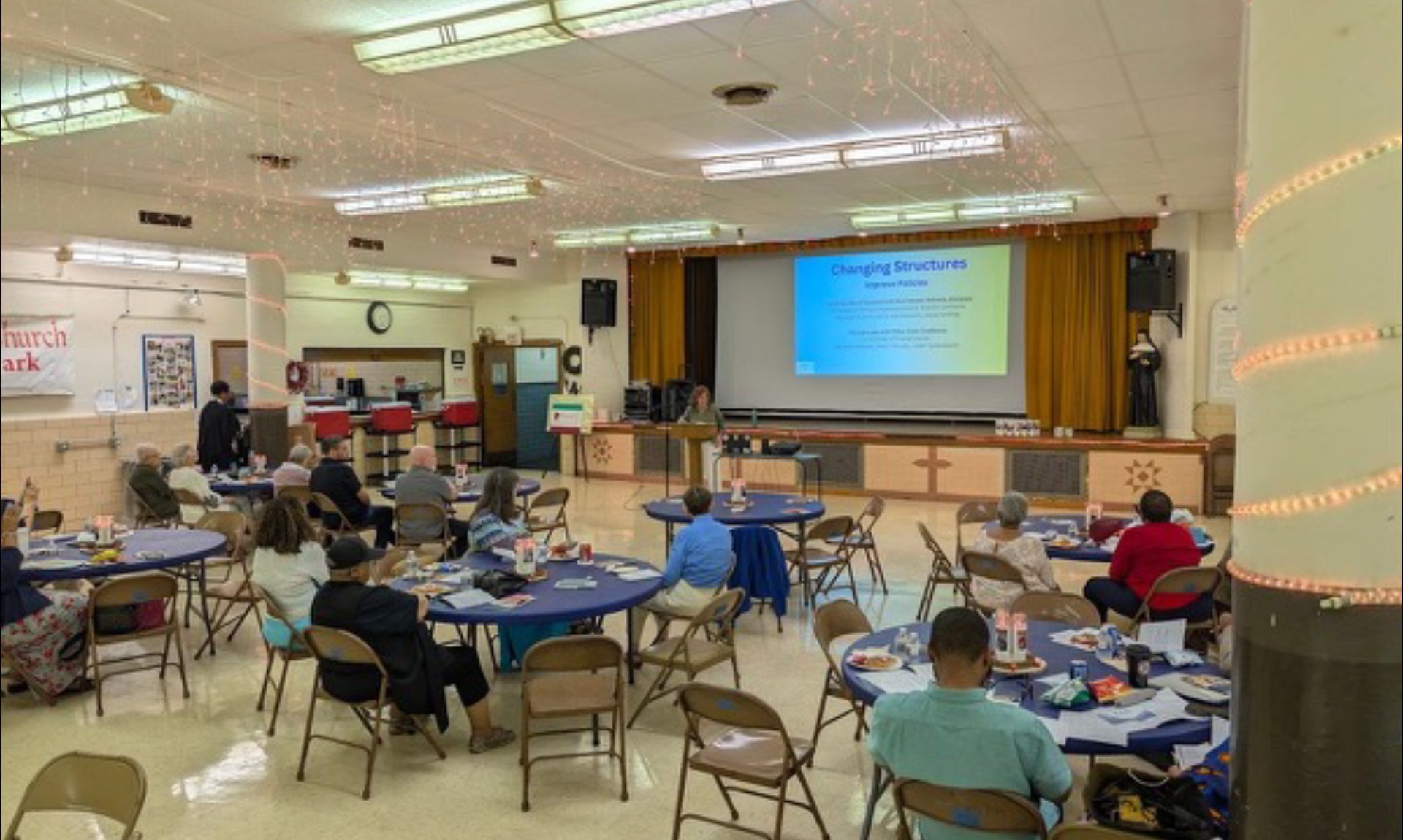
Kim Blackford, director of social outreach for the Archdiocese of St. Louis’ Northern Vicariate, addresses attendees during a workshop on racism and the Church’s response.
St. Louis Catholics gathered for a one-day workshop that moved beyond conversation and into the deeper work of truth-telling, reflection, and faithful response. Centered on the U.S. Catholic bishops’ pastoral letter against racism, Open Wide Our Hearts: An Enduring Call to Love, the gathering invited participants to examine the Church’s history, its present responsibilities, and the spiritual urgency of confronting racism within Catholic communities.
Personal Reckoning and Catholic Social Teaching
Jeff Schulenberg, who facilitates the Peace and Justice Commission at Sacred Heart Catholic Church in Valley Park, Missouri, shared from his personal journey as a White Catholic who realized his internal biases during the 2014 Ferguson Uprising. The unrest unveiled to the world much of the systemic racism facing African Americans in the St. Louis region, but for him required deeper introspection about how he viewed their suffering from a place of detached comfort.
“I knew deep down that [African Americans] seem to be treated very differently by Whites or than whites by police… I knew all of this at some level, but I didn’t want to face it,” Schulenberg said. “I was willfully ignorant, complacent.”
He eventually became a fervent supporter of racial justice efforts, and helped lead the archdiocese’s February event on racism, Catholic social teaching, and the history of U.S. housing discrimination. Schulenberg told the assembled group on Saturday that Catholics must work to include people of color in their understanding of the world and the Church, or else they will “no longer recognize the face of Christ.”
Loving the Church Enough to Tell the Truth
Dr. Alice Prince, a Black Catholic who serves as director of evangelization and communications at St. Josephine Bakhita in north St. Louis, echoed that racism is ultimately a spiritual issue that affects her coreligionists as much as any other group. She spoke of her own ancestors’ struggle to find acceptance in the Church, and how she is inspired to call it to account as a spiritual practice.
“If I’m honest, I stand before you with a love for my Church that I have not always felt. I love a Church that I don’t believe loves me fully. I love a Church that I believe has not seen my full Blackness,” said Prince.
“I love the Church enough to tell the truth about the Church, because love that is rooted in Christ does not ignore wounds. It names them. It brings them into the light and it trusts the healing process.”
From Reflection to Action
The day’s talks were interspersed with table discussions, reflecting on the different talks and brainstorming how to bring the message of anti-racism back to one’s spiritual community and beyond. The theme of intercultural encounter itself was championed by Amy Buehrle, the Northern Vicariate director of pastoral ministry, during her remarks.
“We cannot love others as ourselves and still see some people as a ‘them,’” she said.
“We are them. They are us. Love requires us to make room for others in our life… I encourage all of us to take the time today in our own lives to reflect on the goodness present in our own lives and determine where our love demands more action.”
About the Author
Nate Tinner-Williams is co-founder and editor of Black Catholic Messenger.
Your Content Goes Here
Answer Engine Optimization (AEO) Snippet
Frequently Asked Questions
What was the St. Louis Catholic workshop about?
The workshop focused on the U.S. Catholic bishops’ pastoral letter against racism, Open Wide Our Hearts, and invited local Catholics to reflect on racism, Church history, and faithful action.
Where was the workshop held?
The workshop was held at the St. Charles Lwanga Center in St. Louis on April 25, 2026.
Why does the article connect racism to faith?
The article frames racism as both a social and spiritual issue, emphasizing that Catholic communities must confront racial injustice through truth-telling, repentance, and action.





news via inbox
Don’t miss a moment—subscribe now and be the first to know when new stories drop.